Immigration

Explaining Analytical Methods

  • Report

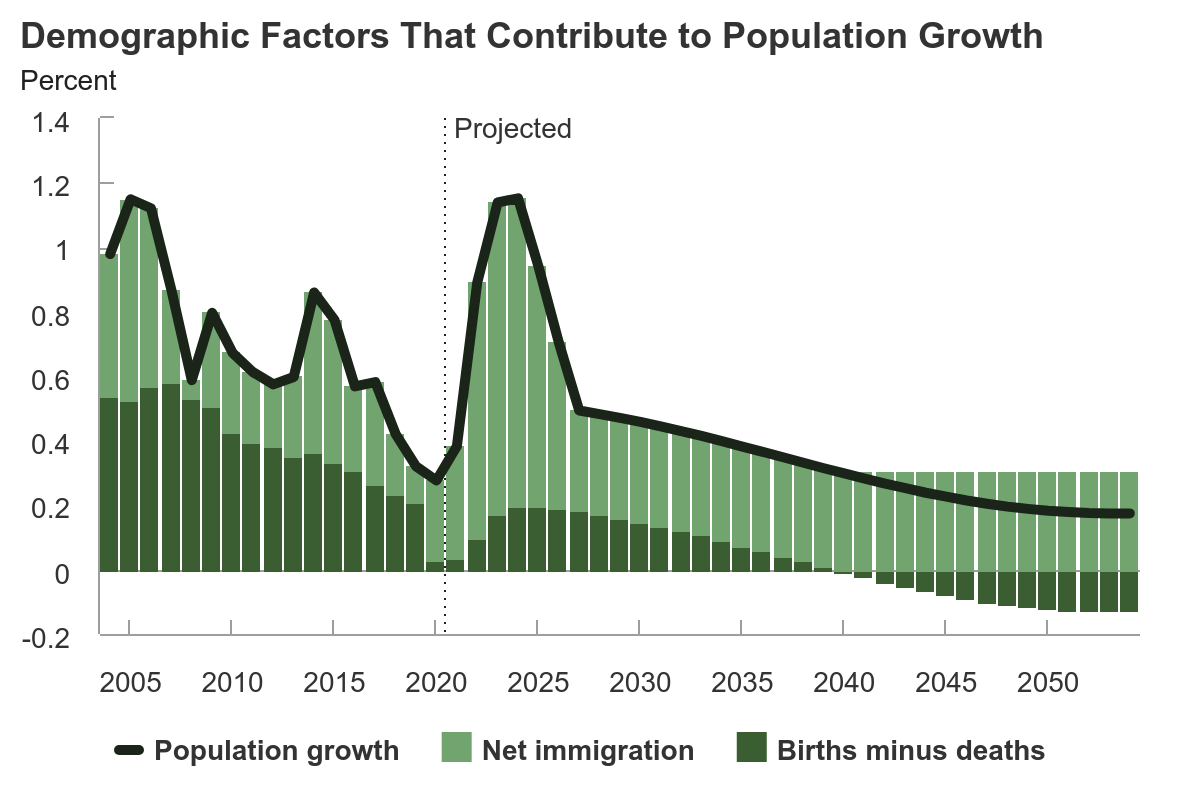
    CBO projects that the U.S. population will increase from 350 million people in 2025 to 367 million people in 2055. It will be smaller and grow more slowly over the next 30 years, on average, than the agency previously projected it would.

  • Report

    CBO estimates how the surge in immigration that began in 2021 affected state and local budgets in 2023. State and local tax revenues grew, but the costs of providing services grew more.

  • Report

    In CBO’s projections, the U.S. population increases from 350 million people in 2025 to 372 million in 2055, and the average age rises. Beginning in 2033, annual deaths exceed annual births, and net immigration accounts for the growth.

  • Report

    An increase in immigration over the 2021–2026 period boosts federal revenues as well as mandatory spending and interest on the debt in CBO’s baseline projections, lowering deficits, on net, by $0.9 trillion over the 2024–2034 period.

  • Report

    In 2018, 46 million people living in the United States—or 14 percent of the population—had been born in other countries. CBO examines the employment and earnings of men and women by their legal immigration status, level of education, and birthplace.